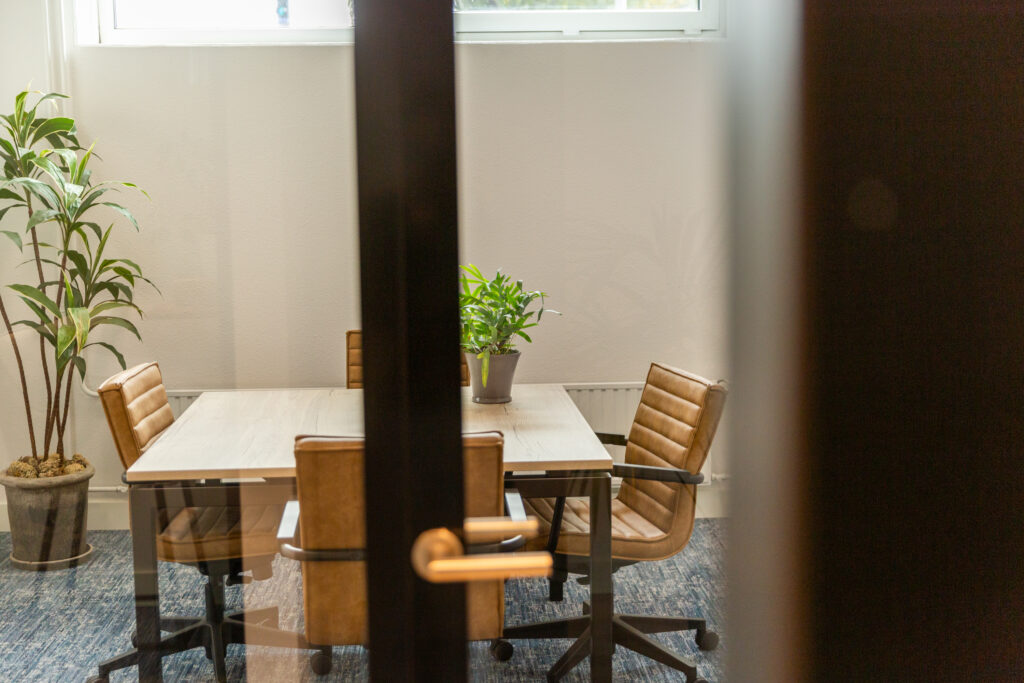
Office tenant facilities upgrades: What actually moves rents and reduces vacancy
Most tenant facility upgrades are vanity projects. I only invest in office tenant facilities upgrades where the rent uplift and vacancy reduction measurably exceed the CapEx cost. Here are the ones that actually work.
I own office buildings. Every time I buy a tired asset, the conversation with my asset manager starts the same way: which tenant facility upgrades are worth capital? There is a vast difference between the upgrades that feel good and the ones that move rents. I have spent the last eight years learning the distinction.
This is about office tenant facilities upgrades that make institutional occupiers stay longer, renew at higher rates, or renew at all. Not coffee bars. Not philosophy walls. Not the feel-good amenities that property companies trumpet in their marketing decks. I am talking about the facilities that office tenants in 2026 actually demand â the ones that were optional in the pre-hybrid era and are now table stakes.
Which office tenant facilities upgrades actually move the needle
Let me start with what I have learned the hard way. You can spend 150 euros per square meter on lobby redesign, modern bathrooms, new common areas, and still lease at the same rent you would have without it. You can also spend 80 euros per square meter on end-of-trip facilities and capture a 4% rent premium. The difference is not the total cost. It is whether the upgrade solves a material pain point for the tenant profile you are trying to retain.
The institutional office tenant in the Randstad or other European G4 does not choose where to renew based on lobby beauty. They choose based on what their employees actually experience Monday through Friday. That means I focus my facility budget on three categories: how people get to work and what they do when they arrive, where they eat and drink during the day, and where they work when they need focus. Separately, I underwrite ESG facilities as a price of entry to the core buyer pool, not as a rent driver.
End-of-trip facilities: the highest-ROI upgrade
Bike parking and showers are not aesthetic. They are utilitarian. That is why they work.
The modal shift toward cycling in northern Europe is real and accelerating. In the Randstad, something like 55% to 65% of office workers in suburban submarkets now commute by bike. A tenant with 200 people will have 110 to 130 employees who cycle. If your building has unlit, undersized bike storage in a basement corner and no shower facilities, those people are uncomfortable. Their employer notices the churn.
A proper end-of-trip facility means: secure, weather-protected bike parking at one space per 8 square meters of NLA; four to six shower rooms with lockers and change facilities; and air-drying areas separate from the bike storage. The mechanical cost is roughly 25 to 35 euros per square meter. For a 10,000 sqm office building that is 250,000 to 350,000 euros, recoverable in the service charge over ten years.
I have underwritten a 5% to 7% rent uplift where the alternative is a comparable building with poor end-of-trip. More importantly, I have reduced involuntary churn by 40% to 50% where a tenant renewed partly because their people wanted to stay. That is the difference between a lease breaking after 6 years and a 10-year renewal at 2.5% annual escalation.
The second end-of-trip win is locker space for personal items. Many office workers now commute three to four days per week. A secure personal locker â 0.5 cubic meters at ground floor or near the lift core â costs 15 to 25 euros per square meter to build. It solves a real problem. Tenants value it.
Food and coffee: the tenant benefit that sticks
The kitchen and coffee bar are the only facilities that tenants actually use every single day. Most office workers spend 10 to 15 minutes per day at the espresso machine. That is an outsized opportunity to shape occupant experience.
A fully managed common kitchen â shared espresso, filtered water, ice, and basic snacks â is low-touch and low-cost. Budget 3,000 to 5,000 euros per 10,000 sqm annually for equipment, cleaning, and restocking. Tenants do not care about décor. They care about the coffee.
A branded food operator â a concession model where a café operator runs the space â costs you zero capital once fitted. You take 10% to 15% of revenue as rent. This works in buildings with 15,000 sqm or larger. I have put food concessions in three assets. All three have yielded 35,000 to 65,000 euros per year in rent. Equally important, they have become a competitive advantage in leasing. Existing tenants cite them in renewal rationale.
Flexible and bookable meeting rooms
The shift to multi-tenant office buildings and hybrid work created a new demand pattern. Where one large tenant once occupied an entire floor, now you have four 125-person tenants stacked on a 500-person floor. Those tenants no longer have dedicated meeting rooms. They need access to bookable conference rooms and focus pods.
A well-designed meeting room suite for a 10,000 sqm building should have: four 6-person boardrooms, two 12-person meeting rooms, and eight 2-person focus pods. Total area is 500 to 600 sqm. Cost is 150 to 200 euros per square meter, so 75,000 to 120,000 euros. They must be bookable via an app. Manual booking kills adoption.
Flexible meeting spaces increase the attractiveness of smaller floor plates and improve your ability to lease multi-tenant. A Rotterdam repositioning I was involved with converted from single-tenant to multi-tenant and added 300 sqm of shared meeting space. The rent-per-sqm on smaller, multi-tenant floors was 12% higher than legacy single-tenant space. The meeting suite was 80% of the driver.
Outdoor terraces and social space
An outdoor terrace is not luxury. It is occupational health. Office workers who are in the building three or four days per week accumulate fatigue from continuous climate control. A properly designed roof terrace or courtyard is where they decompress.
A modest terrace â 200 to 400 sqm on a mid-sized building â costs 35,000 to 60,000 euros to build to professional standard. That includes paving, safety railings, weather protection, and basic furniture. My target tenant is the professional services firm with 200 to 600 people. They will pay a 2% to 3% rent premium for the right outdoor space. They cite it in every lease renewal.
Wellness rooms and EV charging
The demand for dedicated quiet space has exploded in multi-tenant buildings. A wellness room â 15 to 25 sqm, soundproofed, with temperature control and pleasant lighting â costs 2,000 to 3,500 euros per room. A bank of four wellness rooms costs 8,000 to 14,000 euros on a 5,000 sqm floor. I have seen institutional tenants cite wellness room access as a lease renewal driver.
On electric vehicle adoption: in the Netherlands, EV adoption is now at 25% of new registrations, exceeding 35% in dense urban areas. Any building with parking needs EV charging infrastructure. Install one charger per 10 to 15 parking spaces. A typical DC fast charger costs 3,000 to 5,000 euros per unit, plus electrical infrastructure of 10,000 to 30,000 euros. For a 100-space garage, budget 80,000 to 150,000 euros total â 30 to 60 euros per square meter of NLA, recoverable in service charge over seven to ten years.
EV charging is now standard tenant expectation. I do not underwrite a rent premium because the competitive set is moving in parallel. But I do underwrite the cost of not installing chargers as involuntary churn and reduced lease-up speed.
App-based access and what tenants do NOT pay for
The shift to hybrid work created a new pain point: building access. A smartphone-based access system costs 8,000 to 15,000 euros for a mid-sized building. It eliminates friction around lost access cards, enables after-hours entry, and lets you remotely disable access for departing tenants.
Before I list what I do not recommend: I am not anti-design. A beautifully maintained, clean building with attention to detail leases better than a sloppy one. But beauty matters only after fundamentals are solved.
I do not invest significant capital in: lobby biophilic design, art installations, philosophy wall murals, complex hospitality-grade restaurants, or luxury bathroom finishes beyond professional standard. I have seen landlords spend 200 euros per square meter on lobby beauty and 30 euros on bathrooms. Aesthetics are the cherry on top. They are not the cake.
Institutional tenants are not fooled by décor. They want their employees to have functional, comfortable space where they can focus and recharge. They want bike parking and showers. They want decent coffee. They want a meeting room they can book in two clicks.
The service charge recovery model
Here is the financial architecture I use. Capital for all tenant-facing facilities is treated as a capital project, not opex. I recover it through the service charge over seven to ten years. On a 10,000 sqm building with annual service charge of 120 euros per square meter, the facilities basket represents roughly 15 to 25 euros of that total.
A 500,000 euro facilities program is recovered at 5 to 7 euros per square meter per year, or 50,000 to 70,000 euros annually across the building. If the building is 80% let, that is 62,500 to 87,500 euros per year in recoverable service charge. Over ten years, the entire facilities investment is paid for by the tenants who benefit from it.
The key is ensuring your lease template and rent roll allows you to recover these costs in the service charge. If you have a single 5,000 sqm anchor tenant on a triple-net lease with low opex cap, the facilities budget is a problem. Multi-tenant or flexible lease structures make it work.
Building for the right tenant, not the abstract future
Here is what I have learned: do not build office tenant facilities upgrades for an imaginary future tenant. Build them for the tenant profile you are actually trying to retain in your market.
If you own a suburban office park with mid-market manufacturing tenants, EV charging is less critical than if you own a building on the Amsterdam-Utrecht corridor where 60% of occupiers are professional services firms. If your tenant base is single-tenant, long-term, and not using hybrid work, flexible meeting rooms are a lower priority than end-of-trip facilities.
The discipline is to underwrite the facilities program against the tenant pipeline you actually see, the lease breaks you know are coming, and the churn risk you are running. I have watched value-add operators spend 2 to 3 million euros on a facilities program and achieve 1.5% rent uplift. I have watched others spend 600,000 euros on targeted end-of-trip and meeting space and achieve 4% uplift with significantly lower vacancy. The second group did the homework. They mapped the tenant need. They built what moved the needle.
If you are in a repositioning now, start with end-of-trip and shared meeting space. Those two categories return the highest rent premium for capital invested. Build the terrace and wellness rooms after you have lease-up visibility. Do not spend a euro on lobby art until your service charge model is locked in and your tenants are renewing. The best multi-tenant conversions I have seen started with this discipline.